November 19, 2026
Sitges: A Day Trip Guide for Pickleball Players on the Costa Daurada
How to spend an afternoon in Sitges from Coma-ruga or Barcelona: the seafront church, the beaches, the modernista museums, where to eat, and the best wine tasting nearby.
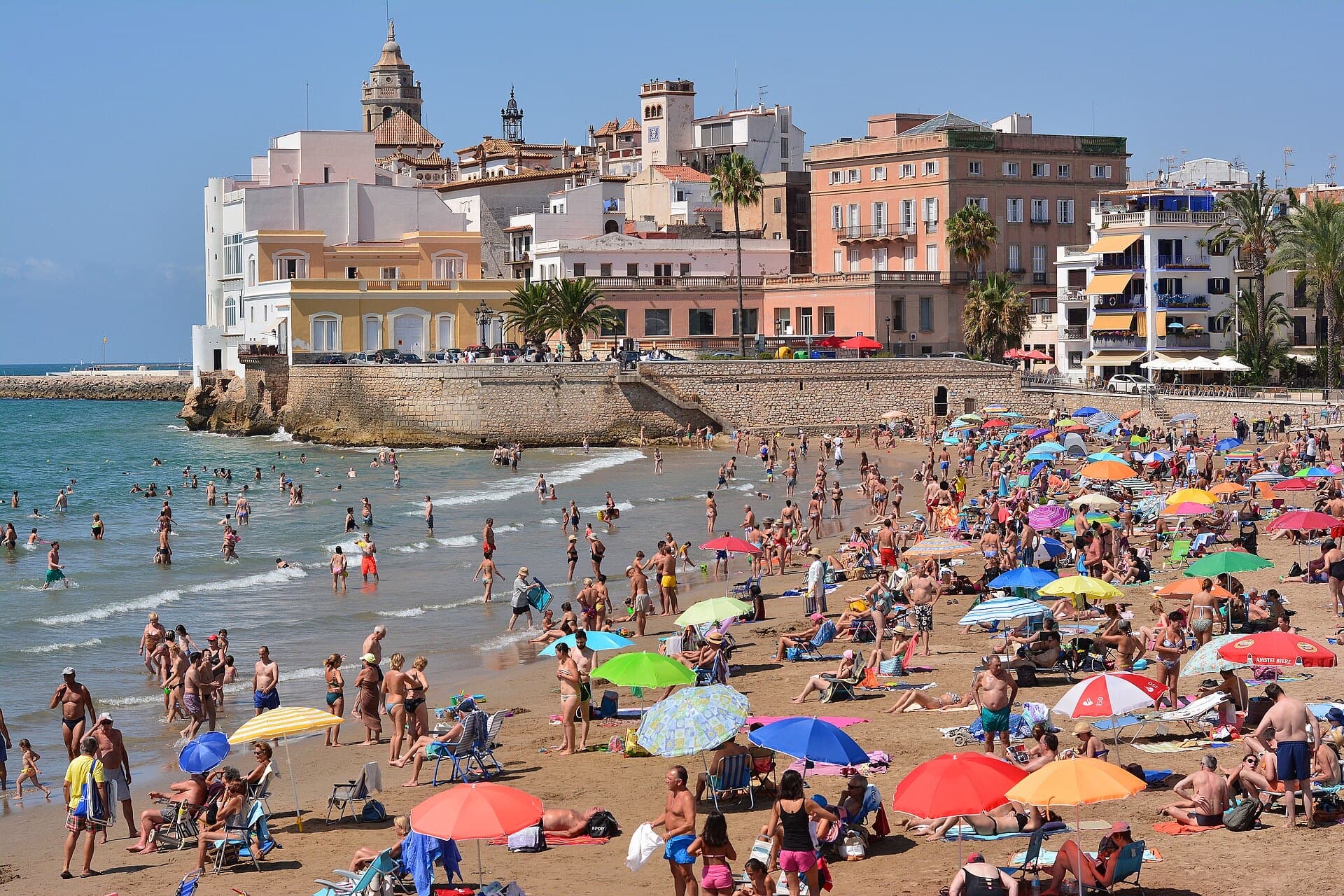
If Coma-ruga is the quiet corner of the Catalan coast, Sitges is its glamorous neighbour. Whitewashed lanes, a church perched above the sea, a string of beaches and a famously lively evening scene make it one of the most popular seaside towns in Spain. It's also an easy afternoon out from our base in Coma-ruga, and it's one of the optional afternoon outings on our Local Dink retreat.
Getting to Sitges
Sitges sits on the coastal railway between Barcelona and Coma-ruga, so it's simple to reach in either direction. From Coma-ruga's station, Sant Vicenç de Calders, trains run north along the coast. From central Barcelona, the same line takes you south through the Garraf tunnels and out above the sea. Either way, sit on the sea side of the train for the view.
The seafront and the church
Start at the church of Sant Bartomeu i Santa Tecla, which stands on a rocky headland right above the beach. It's the image on every Sitges postcard, and the terrace in front of it is the best place in town to get your bearings. From there, the Passeig Marítim runs west along the seafront, lined with palms and grand houses.
Many of those houses were built by americanos or indianos, local people who made their fortunes in the Americas in the 19th century and came home to build mansions that showed it off. Walking the streets behind the seafront is a little architecture lesson in itself.
Art and museums
Sitges punches well above its weight for culture. The painter and writer Santiago Rusiñol made the town a center of the Catalan modernista movement at the end of the 19th century, and his home and studio, Cau Ferrat, is now a museum full of art, ironwork and the spirit of that era. Next door, the Maricel museum sits in a beautiful building overlooking the sea.
Even if museums aren't your thing, the setting alone is worth the short climb up from the beach.
The beaches
Sitges has more than a dozen beaches, from busy town-center stretches to smaller coves further along the coast. The beaches either side of the church are the easiest to reach and have plenty of chiringuitos, the beach bars that serve drinks and food right on the sand. After a morning on court, a swim here followed by a cold drink is hard to beat.
Eating and drinking
Sitges has a huge choice of restaurants, from tapas bars in the old town to seafood restaurants on the front. A few things to try:
- Xató, a winter salad of endive, salt cod and anchovies with a romesco-style sauce, claimed by Sitges and its neighbours along the coast.
- Seafood rice and fideuà, the Catalan noodle version of paella.
- Malvasia de Sitges, the town's own historic sweet wine.
Remember that Catalans eat late. Restaurants fill up from around 9pm.
Festivals worth knowing about
Sitges is famous for its festivals. Its Carnival in February is one of the biggest and most flamboyant in Spain, and the Sitges Film Festival each October is one of the world's leading festivals of fantasy and horror cinema. The town is also one of Europe's best-known LGBTQ+-friendly destinations, with a relaxed, welcoming atmosphere all year round.
Wine tasting from Sitges
Sitges sits at the edge of the Penedès, Catalonia's wine country, and the vineyards of the Massís del Garraf are just behind the town. If you want to add a wine afternoon to your trip, Penedès Wine Tours runs small-group tastings at boutique Garraf estates with hotel pickup in Sitges. We'll be covering the wider region in our upcoming Penedès guide.
Tips for your visit
- Go in the late afternoon and stay for dinner and the sunset.
- Wear comfortable shoes. The old town is hilly and cobbled.
- Avoid peak summer weekends if you don't like crowds. Sitges is very popular with day-trippers from Barcelona.
Explore Sitges with Dink Abroad
On our five-day Local Dink retreat, there's an optional group outing to Sitges one afternoon: we organize the transport, you travel together, and you're free to wander. Mornings are for pickleball; afternoons are for places like this, or the pool.
Next in this series: Roman Tarragona. Questions about the retreats? Send us an inquiry.