November 19, 2026
Tarragona: A Day Trip to Roman Spain from the Costa Daurada
Tarragona's Roman amphitheater, walls and circus are a UNESCO World Heritage Site, just 30 km from Coma-ruga. What to see, where to eat and how to plan an afternoon.
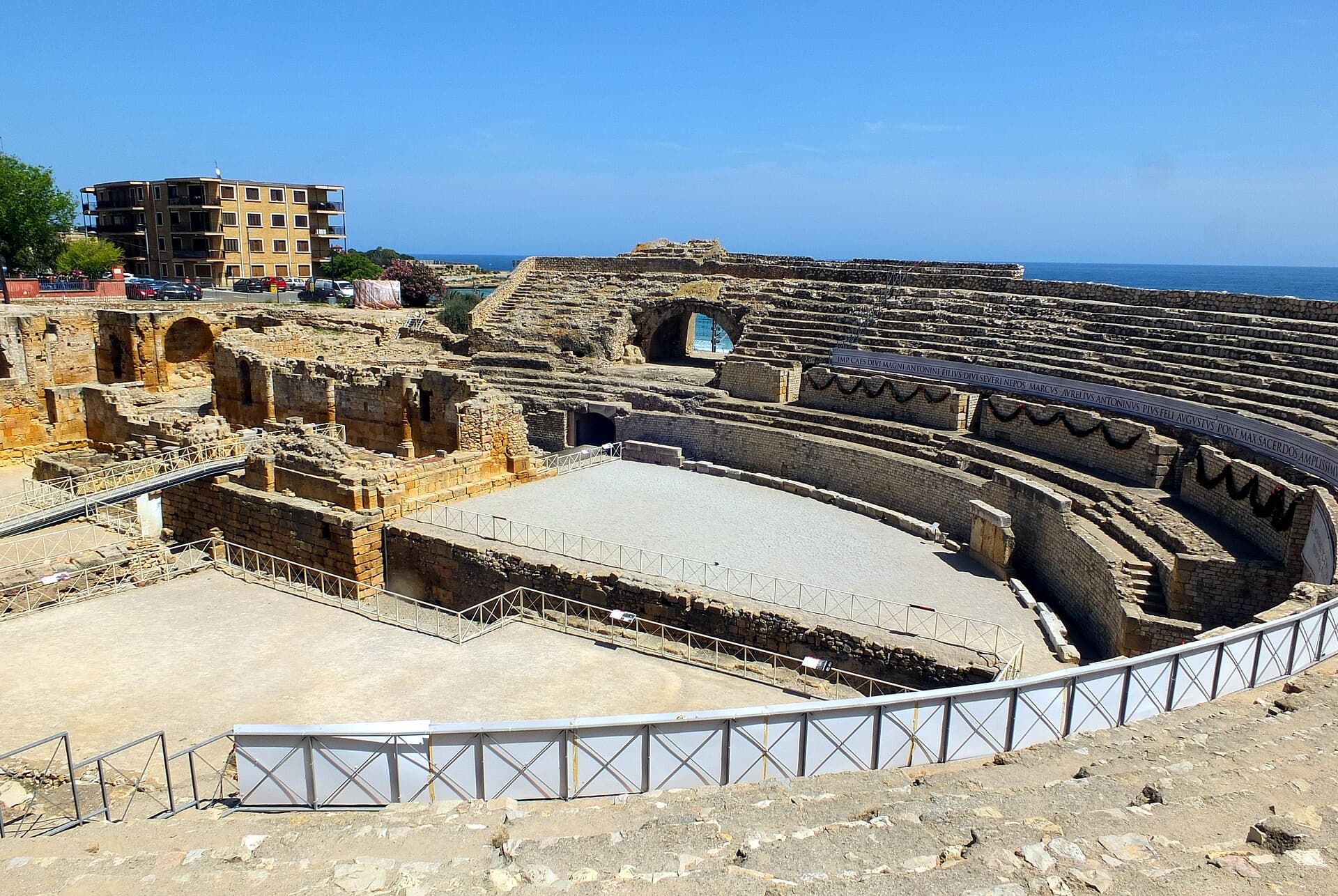
Around 30 km south of Coma-ruga, Tarragona is one of the most rewarding day trips on the Catalan coast. Two thousand years ago it was Tarraco, one of the most important cities in Roman Spain, and its Roman remains are now a UNESCO World Heritage Site. Add a lively old town, a seafront promenade and a fishermen's quarter full of seafood restaurants, and you have a perfect afternoon away from the courts.
Getting there
Tarragona is a short train ride south from Sant Vicenç de Calders, the station for Coma-ruga, on the line that runs down the coast. The station is right below the old town, and most of the sights are a short, uphill walk away.
The amphitheater
Tarragona's Roman amphitheater is the photo everyone takes, and for good reason. It sits right above the beach, with the Mediterranean as its backdrop. Built in the 2nd century AD, it hosted gladiator fights and public spectacles, and later became the site of a church, whose remains you can still see in the arena.
Visit in the late afternoon, when the light turns golden and the stone glows.
More Roman Tarragona
The amphitheater is just the start. Look out for:
- The Roman circus, where chariot races were held. Parts of its vaults survive inside the buildings of the old town.
- The Praetorium, a Roman tower you can climb for views over the city and the sea.
- The Passeig Arqueològic, a walk along the Roman city walls on the edge of the old town.
- Les Ferreres Aqueduct, known locally as the Pont del Diable (Devil's Bridge), a Roman aqueduct a few kilometers outside the city.
A combined ticket covers several of the Roman sites, which makes it easy to see a lot in one afternoon.
The old town and cathedral
Tarragona's old town is a maze of narrow streets built on and around the Roman city. At the top sits the cathedral, a mix of Romanesque and Gothic architecture, with a cloister that's an oasis of calm.
From there, wander down to the Rambla Nova, the city's grand boulevard, which ends at the Balcó del Mediterrani, a balcony high above the sea. Local tradition says you should touch the iron railing for luck.
Eating in Tarragona
Head down to El Serrallo, the fishermen's quarter by the port, for the freshest seafood in town. Tarragona is closely associated with romesco, a rich sauce of roasted peppers, nuts, garlic and olive oil, so look out for it on menus, especially with grilled fish or calçots in late winter and spring.
Castells: the human towers
Tarragona is one of the heartlands of the Catalan tradition of castells, human towers built by teams of people standing on each other's shoulders, sometimes eight or more levels high. The city hosts a famous castells competition every two years, and you'll often see towers built in the old town during its festivals, especially Santa Tecla in September. If you're lucky enough to see one, stay and watch. It's unforgettable.
Tips for your visit
- Wear comfortable shoes. There's a lot of walking, and the old town is steep in places.
- Bring water and a hat in summer. The Roman sites have little shade.
- Stay for an early dinner in El Serrallo before heading back.
See Tarragona with Dink Abroad
Tarragona is one of the optional afternoon outings on our five-day Local Dink pickleball retreat. We organize the transport so everyone who's keen goes together, then you're free to explore at your own pace.
Missed the last guide? Read about Sitges. Next up: the Penedès, Catalonia's cava country. Questions? Send us an inquiry.